Stefan F. Dieffenbacher, M.B.A.
Founder and CEO of Digital Leadership
As the years went by, however, Classic WordPad began to show its age. The application’s feature set, which had once been its greatest strength, started to look limited compared to more modern word processing applications. Microsoft Word, in particular, continued to evolve and add new features, making it an increasingly attractive option for users who needed more advanced functionality.
Classic WordPad may no longer be a widely used application, but its impact on the world of word processing cannot be overstated. As a pioneering application that brought simplicity and ease of use to the masses, Classic WordPad paved the way for the modern word processing applications that we use today. Whether you’re a retro computing enthusiast or simply a fan of classic software, Classic WordPad remains an important part of computing history – and its legacy will continue to inspire future generations of developers, writers, and users. classic wordpad
Classic WordPad was born out of a need for a basic word processing application that could run on the relatively low-powered hardware of the time. Developed by Microsoft, the application was designed to be a stripped-down alternative to the more feature-rich Microsoft Word, which was already gaining popularity in the late 1980s. By focusing on simplicity and ease of use, Classic WordPad’s creators aimed to provide users with a hassle-free writing experience that wouldn’t overwhelm them with unnecessary features. As the years went by, however, Classic WordPad
Let’s find the best solution for your business to grow and scale sustainably!
We will uncover your current business situation and goals and provide you with a bespoke solution that helps you drastically grow your business working with us.


Founder and CEO of Digital Leadership


Read the reviews and make sure that this is not a waste of time, but a super effective tool.

Let’s find the best solution for your business to grow and scale sustainably!


Let’s find the best solution for your business to grow and scale sustainably!
We will uncover your current business situation and goals and provide you with a bespoke solution that helps you drastically grow your business working with us.

Founder and CEO of Digital Leadership
Read the reviews and make sure that this is not a waste of time, but a super effective tool.
Let’s find the best solution for your business to grow and scale sustainably!

On this call, we will uncover your current business situation and goals and talk about how to drive change and solve your need.

Welcome to our scheduling page.
Choose the meeting type that applies to your needs and schedule a time to meet with someone from our team.
We look forward to speaking with you soon!
Let’s find the best solution for your business to grow and scale sustainably!

On this call, we will uncover your current business situation and goals and talk about how to drive change and solve your need.
Welcome to our scheduling page.
Choose the meeting type that applies to your needs and schedule a time to meet with someone from our team.
We look forward to speaking with you soon!
Let’s find the best solution for your business to grow and scale sustainably!

On this call, we will uncover your current business situation and goals and talk about how to drive change and solve your need.
Welcome to our scheduling page.
Choose the meeting type that applies to your needs and schedule a time to meet with someone from our team.
We look forward to speaking with you soon!

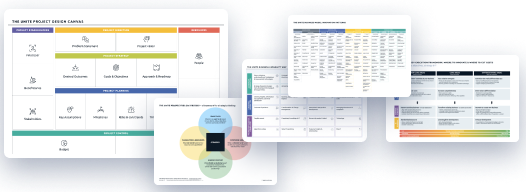
In a uniquely designed 60 or 90 minute session*, we will …
Based on the Blueprinting session, you will receive a tailored blueprint that aligns with your objectives, vision and goals, ensuring that your initiative is a success from start to finish.

In this session, you will be working together with Patrick Zimmermann, Associate Partner for Customer Experience


In a uniquely designed 60 or 90 minute session*, we will …
Based on the Blueprinting session, you will receive a tailored blueprint that aligns with your objectives, vision and goals, ensuring that your initiative is a success from start to finish.

In this session, you will be working together with Dr. Andreas Rein, Partner at Digital Leadership for Culture & Org Change


In a uniquely designed 60 or 90 minute session*, we will …
Based on the Blueprinting session, you will receive a tailored blueprint that aligns with your objectives, vision and goals, ensuring that your initiative is a success from start to finish.

In this session, you will be working together with Sascha Martini, Partner at Digital Leadership for Innovation and Digital Transformation
In a uniquely designed 60 or 90 minute session*, we will …
Based on the Blueprinting session, you will receive a tailored blueprint that aligns with your objectives, vision and goals, ensuring that your initiative is a success from start to finish.

In this session, you will be working together with Stefan F. Dieffenbacher, Founder of Digital Leadership
Stefan is a global thought leader in the innovation space
In a uniquely designed 60 or 90 minute session*, we will …
Based on the Blueprinting session, you will receive a tailored blueprint that aligns with your objectives, vision and goals, ensuring that your initiative is a success from start to finish.

In this session, you will be working together with Adam D. Wisniewski, Partner for IT Strategy & Business Alignment
Let’s find the best solution for your business to grow and scale sustainably!

On this call, we will uncover your current business situation and goals and talk about how to drive change and solve your need.
Welcome to our scheduling page.
Choose the meeting type that applies to your needs and schedule a time to meet with someone from our team.
We look forward to speaking with you soon!
Let’s find the best solution for your business to grow and scale sustainably!

On this call, we will uncover your current business situation and goals and talk about how to drive change and solve your need.
Welcome to our scheduling page.
Choose the meeting type that applies to your needs and schedule a time to meet with someone from our team.
We look forward to speaking with you soon!
Let’s find the best solution for your business to grow and scale sustainably!

On this call, we will uncover your current business situation and goals and talk about how to drive change and solve your need.
Welcome to our scheduling page.
Choose the meeting type that applies to your needs and schedule a time to meet with someone from our team.
We look forward to speaking with you soon!
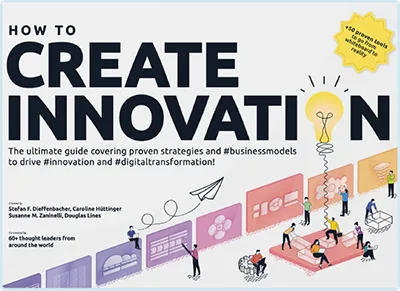 Book How to Create Innovation